

Sending the same resume to every job opening is one of the most common mistakes active job seekers make. It feels efficient, but it costs you interviews. Understanding why multiple resume versions matter changes how you approach the entire application process. Instead of hoping a generic document fits whatever a recruiter is looking for, you start with resumes built around what each specific role actually needs. This article covers what multiple versions really mean, the evidence behind their impact, how to manage them without losing your mind, and practical steps for building your own resume stack.
Table of Contents
- Key takeaways
- Why multiple resume versions matter more than you think
- How tailored resumes improve your interview rate
- Managing multiple resume versions without chaos
- How to create effective variations for different roles
- My honest take on the versioning discipline
- Get your resume versions ATS-ready with Parseworks
- FAQ
Key takeaways
| Point | Details |
|---|---|
| One resume rarely fits all | Generic resumes miss role-specific keywords that ATS and recruiters look for in each application. |
| Tailored resumes double your odds | Applicants with tailored resumes see significantly higher interview rates compared to those using generic versions. |
| Multiple versions means core templates | You need 2 to 4 role-focused base resumes, not a fresh rewrite for every single job you apply to. |
| A master resume prevents errors | Keeping one source-of-truth document stops date and title inconsistencies from creeping into your versions. |
| Naming and tracking matter | Disciplined file naming tells you exactly which resume you sent to which company and when. |
Why multiple resume versions matter more than you think
Most job seekers understand tailoring at a surface level. Swap a few words in the summary, maybe adjust a bullet point or two, and call it a day. But that is not what multiple resume versions actually means, and the distinction is worth getting clear on.
Multiple resume versions refers to creating two to four core resumes, each built around a distinct role type or industry. One version might be optimized for a software engineering role. A separate version might target a technical project management position. These are not cosmetic variations of the same file. They have different summaries, different skills sections, and different bullet points pulled forward depending on which experiences are most relevant to that role category.
Different employer requirements exist even for roles that sound similar on the surface, which is why separate versions beat simple line-by-line editing. When you have these core versions in place, tailoring for an individual job posting becomes a fast, targeted exercise rather than a major rewrite every time you apply.
Here is what falls into the "multiple versions" category versus what does not:
- Core version: A software engineer resume built around backend development, with relevant projects, languages, and systems experience highlighted throughout.
- Core version: A data science resume that foregrounds statistical modeling, Python workflows, and machine learning projects.
- Simple tailoring: Taking your software engineer core version and adjusting the skills section and one or two bullets to match a specific job description before submitting.
Pro Tip: Think of your core versions as reusable templates. Each application is just a small adjustment to the right template, not a blank-page exercise.
Job seekers spend about 1 hour revising resumes before each application. Having solid core versions cuts that time significantly because you are editing within a targeted framework rather than rethinking your entire positioning from scratch.

How tailored resumes improve your interview rate
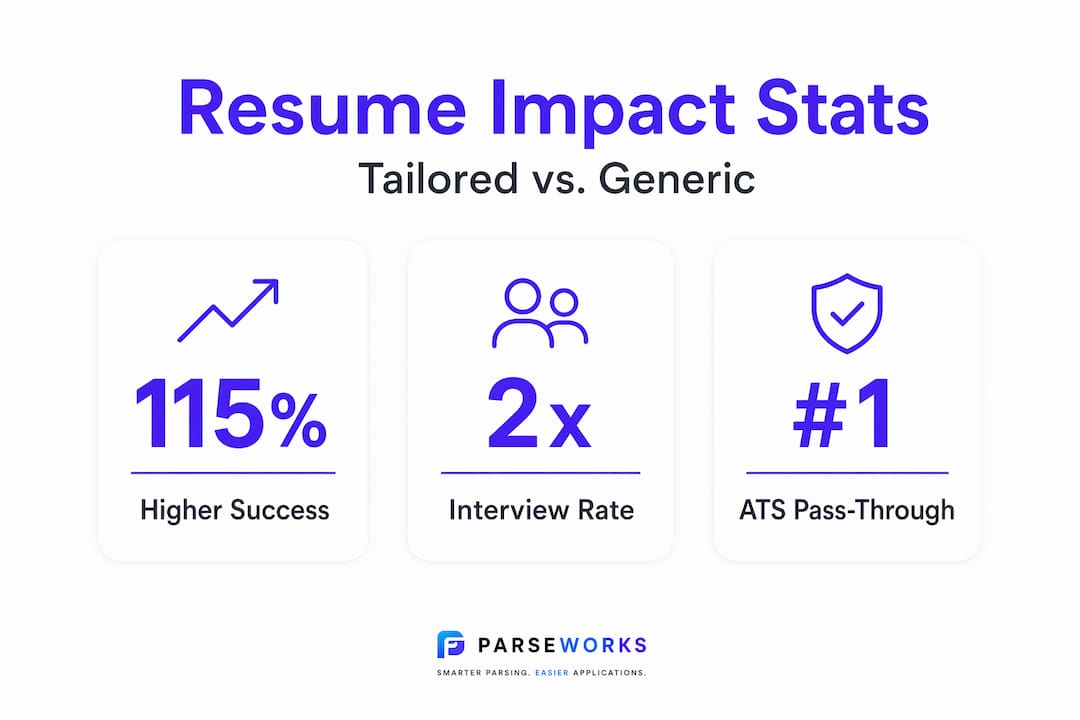
The numbers here are clear enough to take seriously. Applicants with tailored resumes saw a 115% higher success rate and roughly double the interview opportunities compared to those submitting generic documents. That is not a marginal improvement. That is a structural advantage.
There are two reasons tailored resumes perform better, and both are worth understanding separately.
ATS keyword screening
Most mid-to-large companies run resumes through an Applicant Tracking System before a human ever sees them. These systems scan for relevant keywords and role-specific terms that a generic resume frequently misses. If a job posting asks for "cross-functional stakeholder communication" and your resume says "collaborated with teams," the ATS may not register those as equivalent. A tailored version would use the exact phrasing from the posting.
For a deeper look at how ATS systems parse and score resume content, the ATS resume length guide from Parseworks explains exactly what factors determine whether your resume makes it through.
Recruiter perception
Once a resume clears ATS screening, recruiters interpret customized resumes as a sign of genuine interest in the role. A resume that speaks directly to what the job requires signals that you did your research. A generic document signals the opposite, even when you are genuinely qualified.
| Resume type | ATS pass-through | Recruiter engagement | Interview likelihood |
|---|---|---|---|
| Generic resume | Lower due to keyword gaps | Lower, feels impersonal | Baseline |
| Lightly tailored | Moderate improvement | Moderate | Moderate increase |
| Role-specific version | High keyword alignment | High, signals genuine interest | Significantly higher |
Beyond ATS and recruiter optics, tailored resumes let you highlight role-specific accomplishments and remove unrelated details that dilute your story. A hiring manager for a marketing role does not need to read about your database administration work. Cutting that noise makes every line on your resume work harder.
Managing multiple resume versions without chaos
This is where most people fall apart. They create a few versions, lose track of which is which, end up with conflicting dates across files, and eventually abandon the whole system. Good version management is not complicated, but it does require a little structure upfront.
The system that works best looks like this:
- Build a master resume. This is your private source document. Every job you have held, every accomplishment, every skill. Nothing is edited for fit here. It is purely comprehensive. Keeping all factual content in one source of truth prevents the date and title errors that creep in when you are editing multiple files independently.
- Create two to four role-focused core versions. Pull from your master resume to build these. Each one emphasizes a different role type: engineering, management, sales, whatever your actual targets are. These are your reusable bases.
- Use modular bullet points. Structured bullet modules let you select and swap accomplishments per application without rewriting from scratch. Your core versions each contain the most relevant bullets for that role category, and you do minor swaps for individual postings.
- Name every export file clearly. A naming convention like "FirstLast_RoleType_CompanyName_YYYYMMDD" tells you exactly what you sent and when. Naming exports with role/company/date removes the confusion that hits you when a recruiter calls weeks later and asks which version they are looking at.
- Never edit your master resume for a specific application. The master is untouchable. All application-specific edits happen in the core versions or exports.
Pro Tip: Keep a simple spreadsheet alongside your resume files. One row per application, with columns for company name, role, which version you sent, and the date. Five minutes of logging saves significant confusion later.
Content drift is the biggest risk in this system. That happens when you edit a core version for one application, save it without reverting, and then use that drifted file as your new base. Treat your core versions like templates. Always work from them, never write permanently over them for a single application.
How to create effective variations for different roles
Building the versions is the part most guides skip over. Here is a practical approach that keeps the work focused and repeatable.
Start with the job description. Read it carefully and pull out the specific skills, tools, responsibilities, and language the employer uses. Pay attention to what appears more than once. Frequency signals priority. Your tailored version should use this language naturally throughout the summary, skills section, and relevant bullet points.
Adjust these three sections first: the professional summary, the skills or competencies section, and the top two bullet points under your most recent role. These three areas have the highest visibility and the most impact on both ATS scoring and recruiter first impressions.
When deciding whether to create a new core version or simply tailor an existing one, use this test: if the role requires a fundamentally different skill emphasis or tells a completely different career story, you need a new core version. If it is the same role type at a different company, simple tailoring of an existing version is enough.
For reference, here is how the decision typically breaks down:
- New core version needed: Transitioning from individual contributor to people manager, shifting from technical to client-facing roles, or applying across industries where your experience reads differently.
- Simple tailoring is enough: Applying to two software engineering roles at different companies, targeting similar marketing positions across different industries.
The resume tailoring approach that works best focuses on alignment without fabrication. You are not inventing experience you do not have. You are surfacing the right experience for the right context, which is exactly what recruiters are hoping to see when they open your document. For technical roles submitted through platforms like Workday, formatting matters as much as content. The Workday resume formatting guide walks through the specific structural requirements those systems expect.
My honest take on the versioning discipline
I've watched talented candidates lose jobs they were genuinely right for because their resume didn't reflect it. Not because they lacked the experience, but because they sent the wrong version of themselves on paper.
What I've learned from seeing this up close is that the resistance to multiple versions usually comes from the wrong place. People think it means more work. It actually means front-loading work so every individual application gets easier. The candidates who build their resume stack properly spend less time per application and get more callbacks. The math is not complicated.
The mistake I see most often is treating the summary section as an afterthought. It sits at the top of every resume, a recruiter reads it in the first ten seconds, and most people leave it generic across all versions. A summary that speaks directly to the specific role type you are targeting is one of the highest-value edits you can make. Two or three sentences, role-specific language, and one concrete result. That alone separates a core version from a generic file.
The other thing I'd push back on is the idea that versioning feels dishonest, like you are presenting different people to different employers. You are not. You are the same person with a broad range of experience. Multiple versions just make sure the right part of that experience shows up for the right role. Recruiters know this. They prefer it.
— Sam
Get your resume versions ATS-ready with Parseworks
Building multiple resume versions is only half the equation. The other half is knowing whether those versions actually perform in ATS systems before you hit submit.
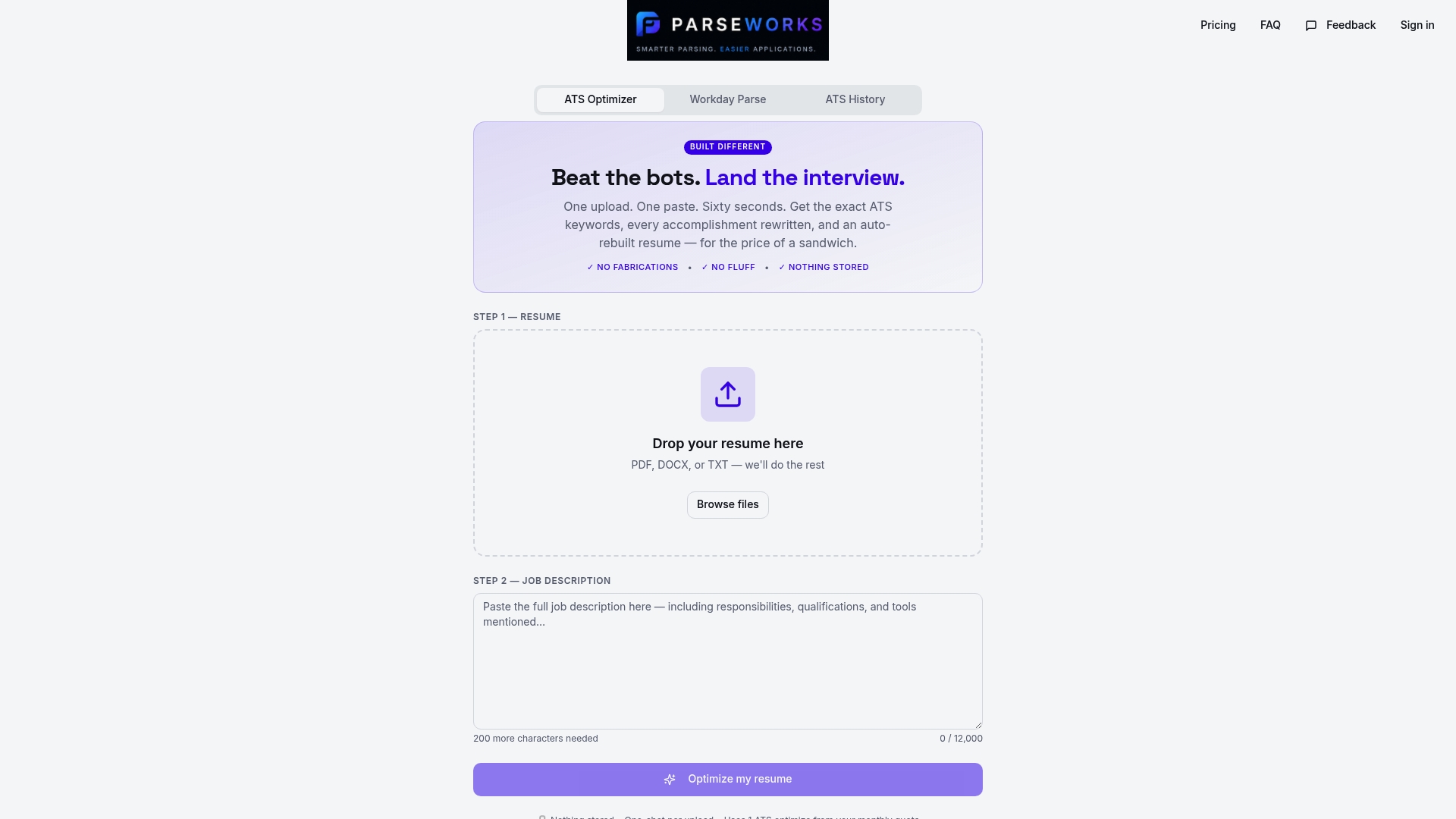
Parseworks is built specifically to remove that uncertainty. The free ATS resume checker scores your resume for keyword alignment, formatting issues, and ATS compatibility in seconds. No guesswork, no waiting to hear back from a recruiter to find out your resume never made it through screening. Upload each of your core versions, see exactly where the gaps are, and fix them before they cost you an interview. Explore ParseWorks plans to see which option fits how actively you are applying.
FAQ
What does having multiple resume versions mean?
Multiple resume versions means maintaining two to four core resumes, each tailored to a distinct role type or industry, rather than sending one generic document to every application. Each version highlights the most relevant skills, accomplishments, and language for that specific role category.
How many resume versions should I have?
Most job seekers benefit from two to four core versions based on their primary job targets. Indeed recommends separate core resumes by job type to speed up tailoring for individual applications without rewriting everything from scratch.
Do tailored resumes actually improve interview rates?
Yes, significantly. Research cited by Money Talks News found that tailored resumes produce a 115% higher success rate and roughly double the interview opportunities compared to generic submissions.
Will ATS systems reject my resume if it isn't tailored?
ATS systems screen resumes for specific keywords and role terms that generic resumes often miss. A resume that doesn't reflect the language in the job posting has a lower chance of passing initial screening, regardless of your actual qualifications.
How do I avoid confusion when managing multiple resume versions?
Use a consistent file naming convention that includes role type, company name, and date. Pair that with a simple application log and keep a master resume as your factual source of truth. Naming exports with role and date means you always know exactly which version went where.